BMI Explained: What Body Mass Index Can and Cannot Tell You
Last updated 2026-10-20
The calculation
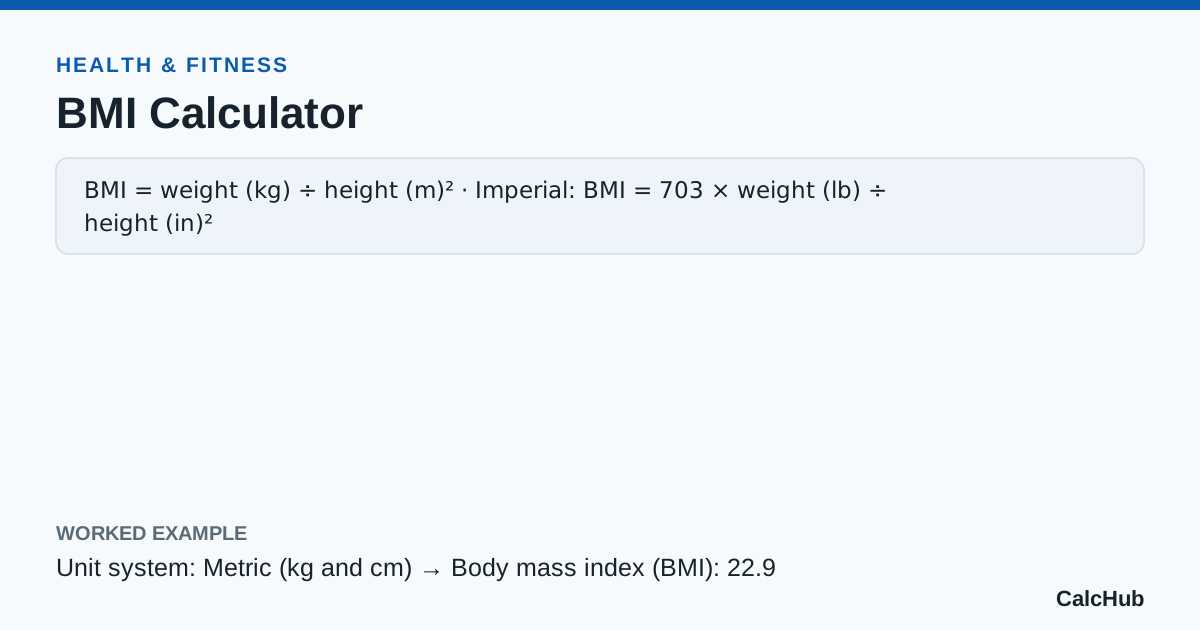
Body Mass Index is weight in kilograms divided by height in metres squared: BMI = kg/m². It was designed by Adolphe Quetelet in the 19th century as a population statistic, and health agencies adopted it because it needs only a scale and a tape measure.
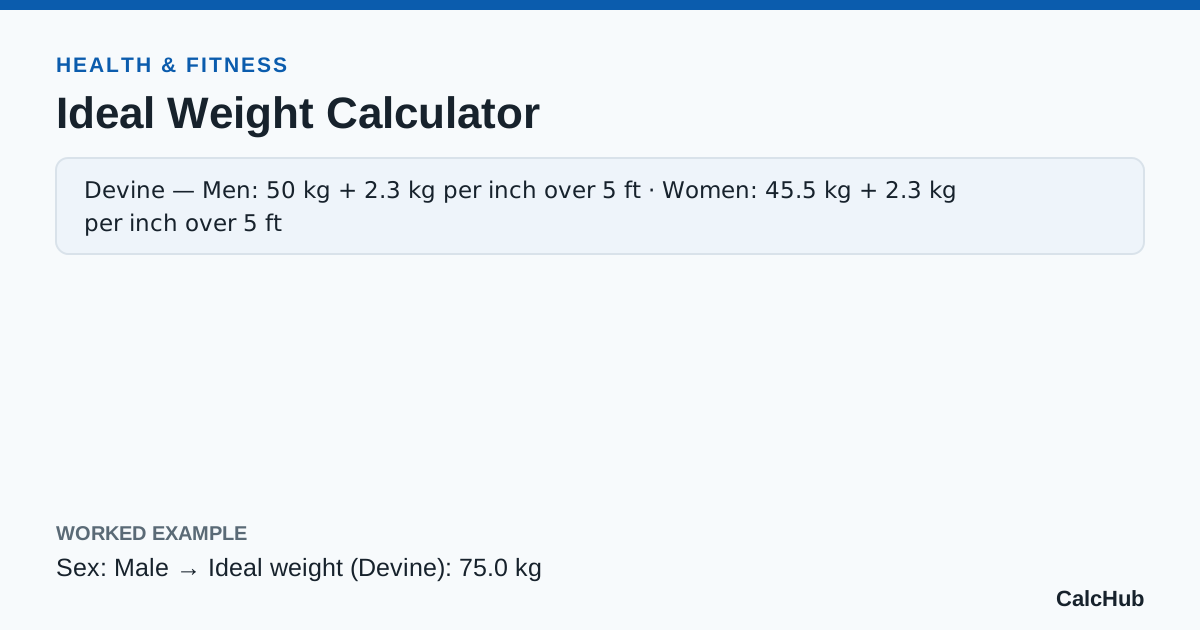
Calculate yours with the BMI Calculator, and see how it relates to the healthy weight range in the Ideal Weight Calculator.
The standard categories
For adults, the World Health Organization categories are: underweight below 18.5, healthy weight 18.5–24.9, overweight 25–29.9, and obesity 30 and above. These bands correlate with health risk across large populations, which is what they were built for.
The limits
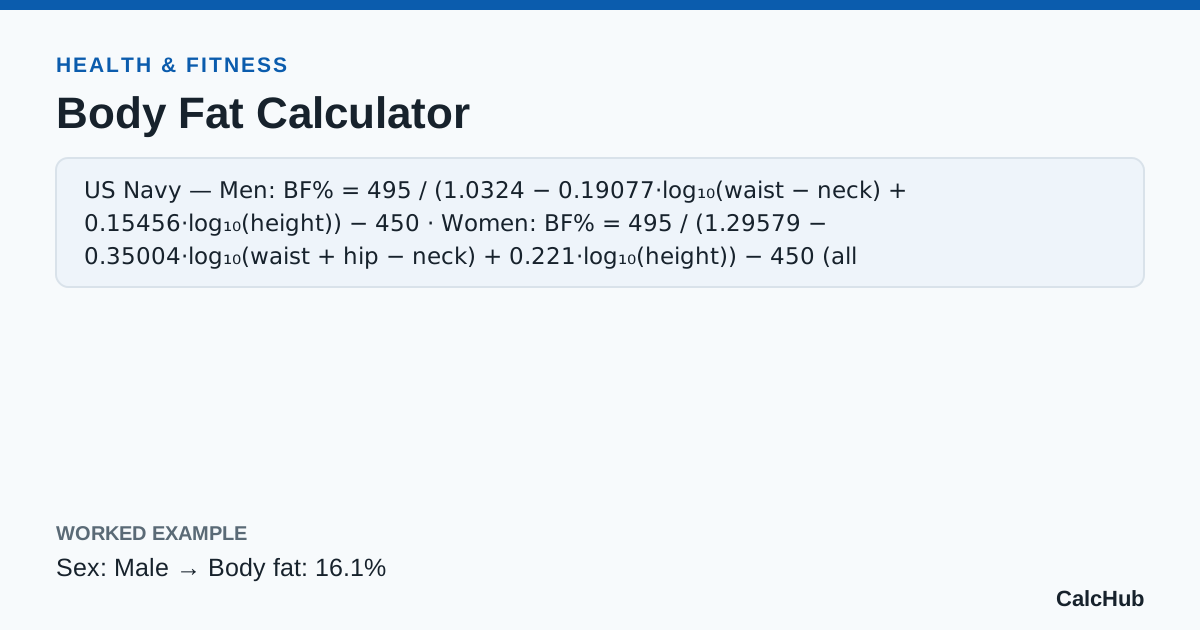
BMI does not measure body fat, muscle, bone density or fat distribution. A strength athlete can land in the “overweight” band with very low body fat, and an older adult can be “healthy weight” while carrying little muscle. Waist circumference, the US Navy body-fat estimate and clinical assessment add the missing context.
Treat BMI as a screening signal, not a diagnosis — and discuss any concerns with a clinician.