Torque Converter
Convert N·m, kN·m, lbf·ft, lbf·in and kgf·m.
Quick answer
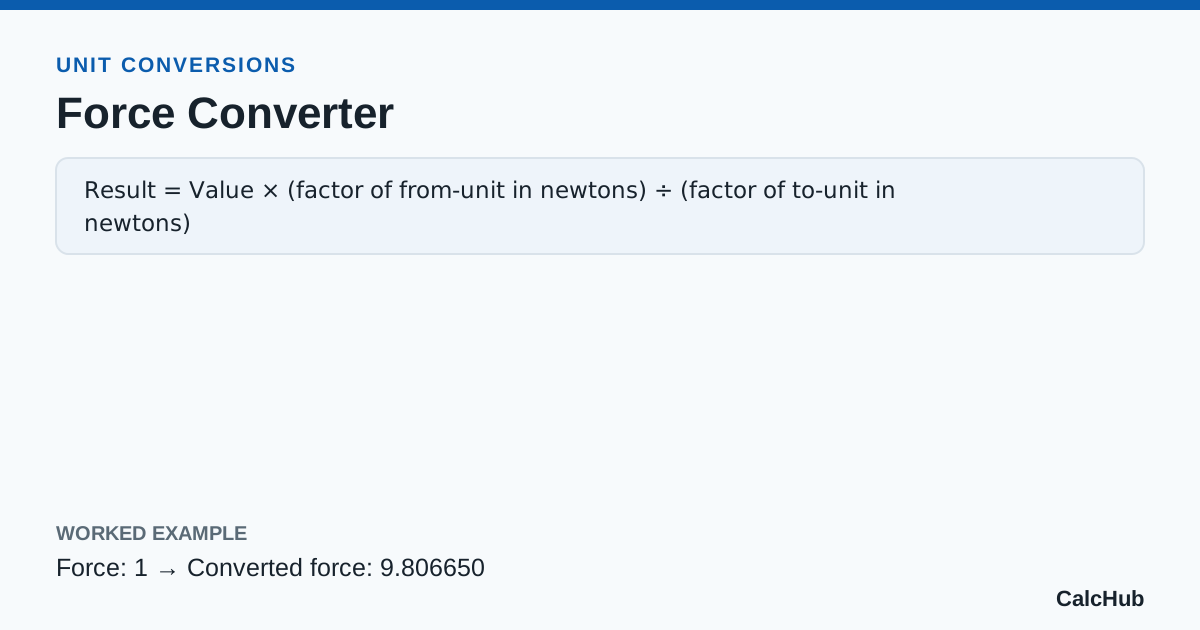
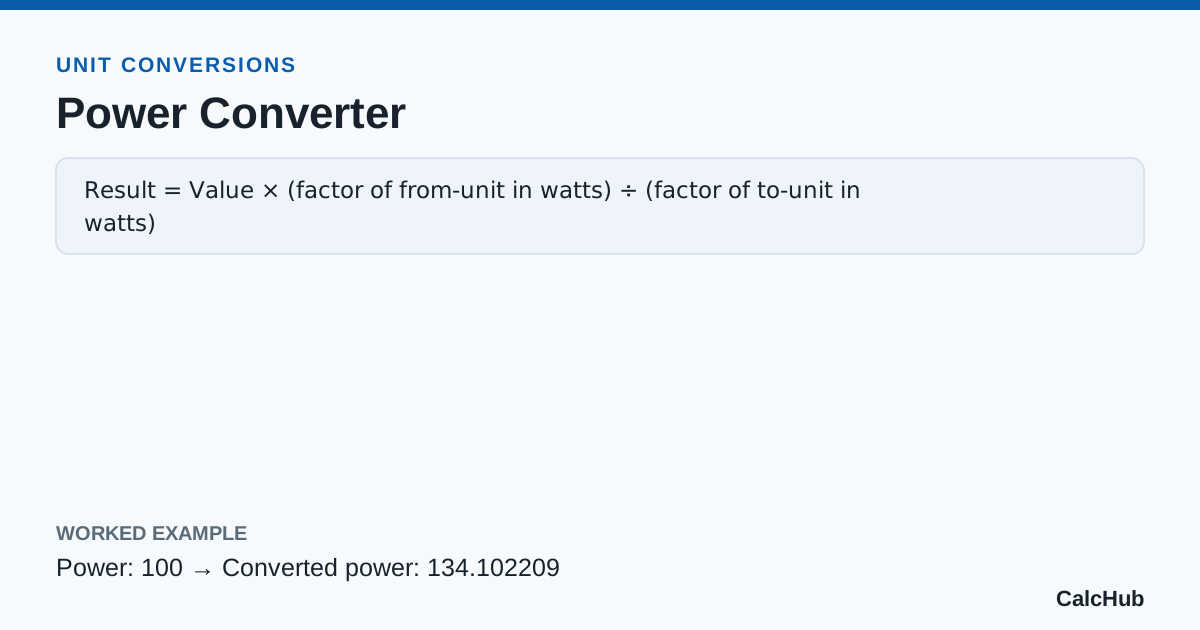
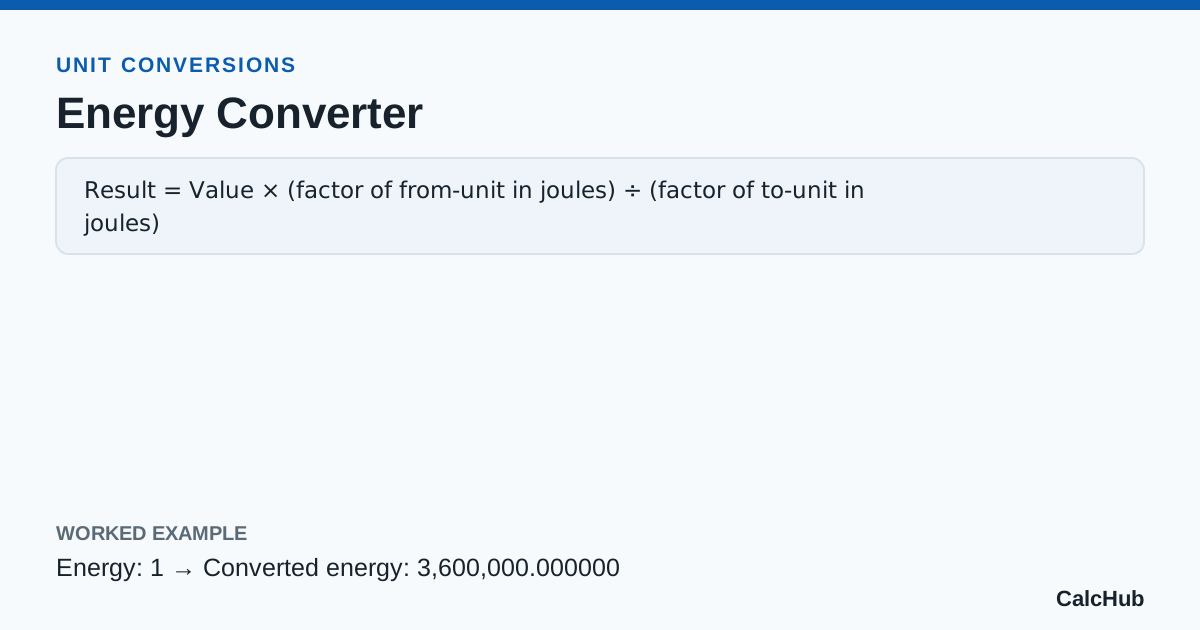
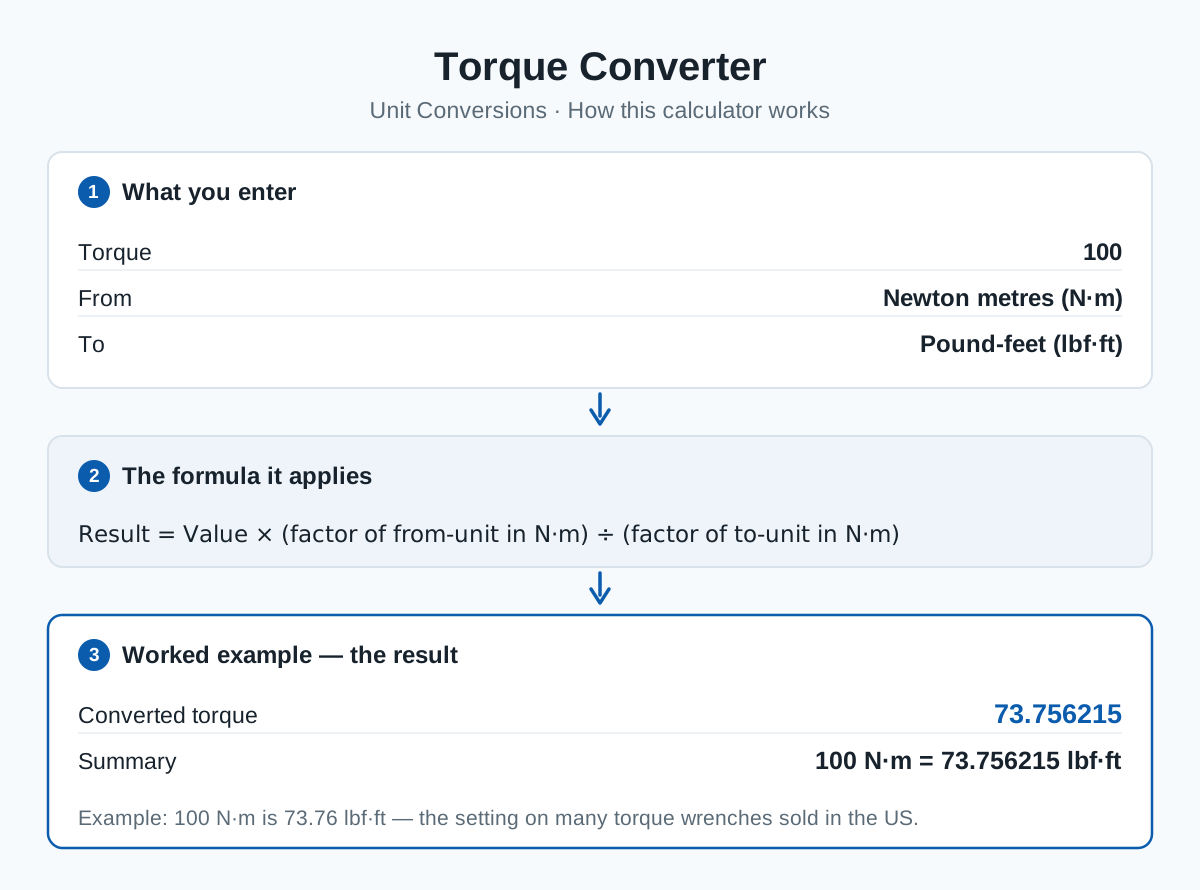
- Formula: Result = Value × (factor of from-unit in N·m) ÷ (factor of to-unit in N·m)
- Worked example — Converted torque: 73.756215 (full example below).
Torque Converter
| Converted torque | 73.756215 |
| Summary | 100 N·m = 73.756215 lbf·ft |
100 N·m is 73.76 lbf·ft — the setting on many torque wrenches sold in the US.
Convert torque (turning force) through the newton metre. The imperial workhorse, the pound-foot, is exactly 1.355817948 N·m; a pound-inch is one twelfth of that, and a kilogram-force metre is exactly 9.80665 N·m.
Context: a typical car wheel nut is torqued to about 100 N·m (74 lbf·ft), while engine outputs of 300 N·m are quoted as 221 lbf·ft in the US.
The formula
Worked example
100 N·m is 73.76 lbf·ft — the setting on many torque wrenches sold in the US.
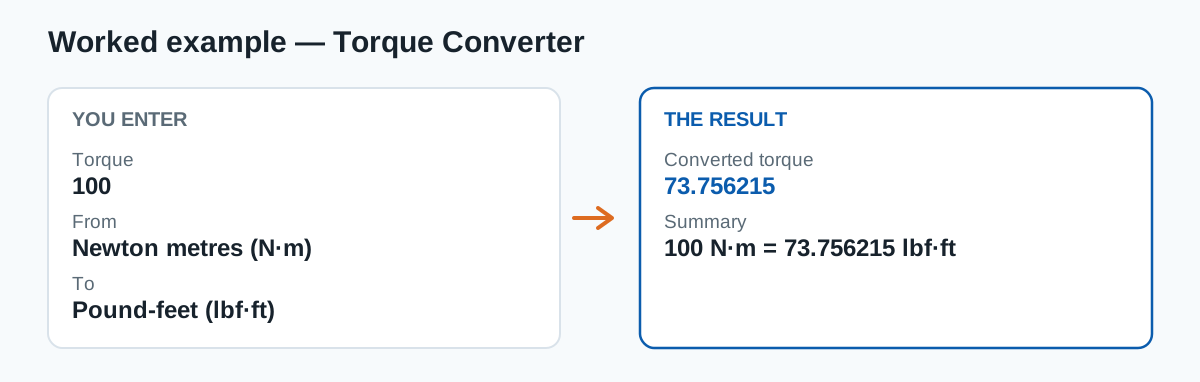
The example is pre-loaded in the result panel — press Calculate with your own numbers to replace it.
Frequently asked questions
How many N·m are in a foot-pound?
1.355818 N·m. To convert lbf·ft to N·m multiply by about 1.356; the reverse divides by it.
Is torque the same as energy since both use N·m?
The units match but the concepts differ: torque is a force acting at a distance (a vector), while the joule measures work done. Torque is never quoted in joules.
Why do small fasteners use lbf·in?
Small torques read better in pound-inches: 60 lbf·in is a clearer spec than 5 lbf·ft. There are exactly 12 lbf·in in 1 lbf·ft.
Category: Unit Conversions calculators
Sources & methodology
This calculator applies the formula shown on this page exactly as written, using the standard definitions for its inputs. Results are computed from the values you enter — no data is stored — and are rounded only for display.
Content last reviewed by CalcHub Editorial.
Embed this calculator on your site
Free to use with attribution — paste the snippet below and the calculator appears on your page, with a link back to CalcHub.