
Fence Calculator
Panels, posts, rails and concrete bags for a panel fence run.
Quick answer
- Formula: Panels = ceil(Fence length ÷ panel width); Posts = Panels + 1 + gates; Rails = Panels × rails per panel; Bags = ceil(Posts × bags per post)
- Worked example — Panels: 13 (full example below).
Fence Calculator
| Panels | 13 |
| Posts | 15 |
| Rails | 26 |
| Concrete bags for posts | 23 |
A 100 ft fence with 8 ft panels needs 13 panels, 15 posts (including one extra for the gate), 26 rails and 23 bags of concrete at 1.5 bags per post.
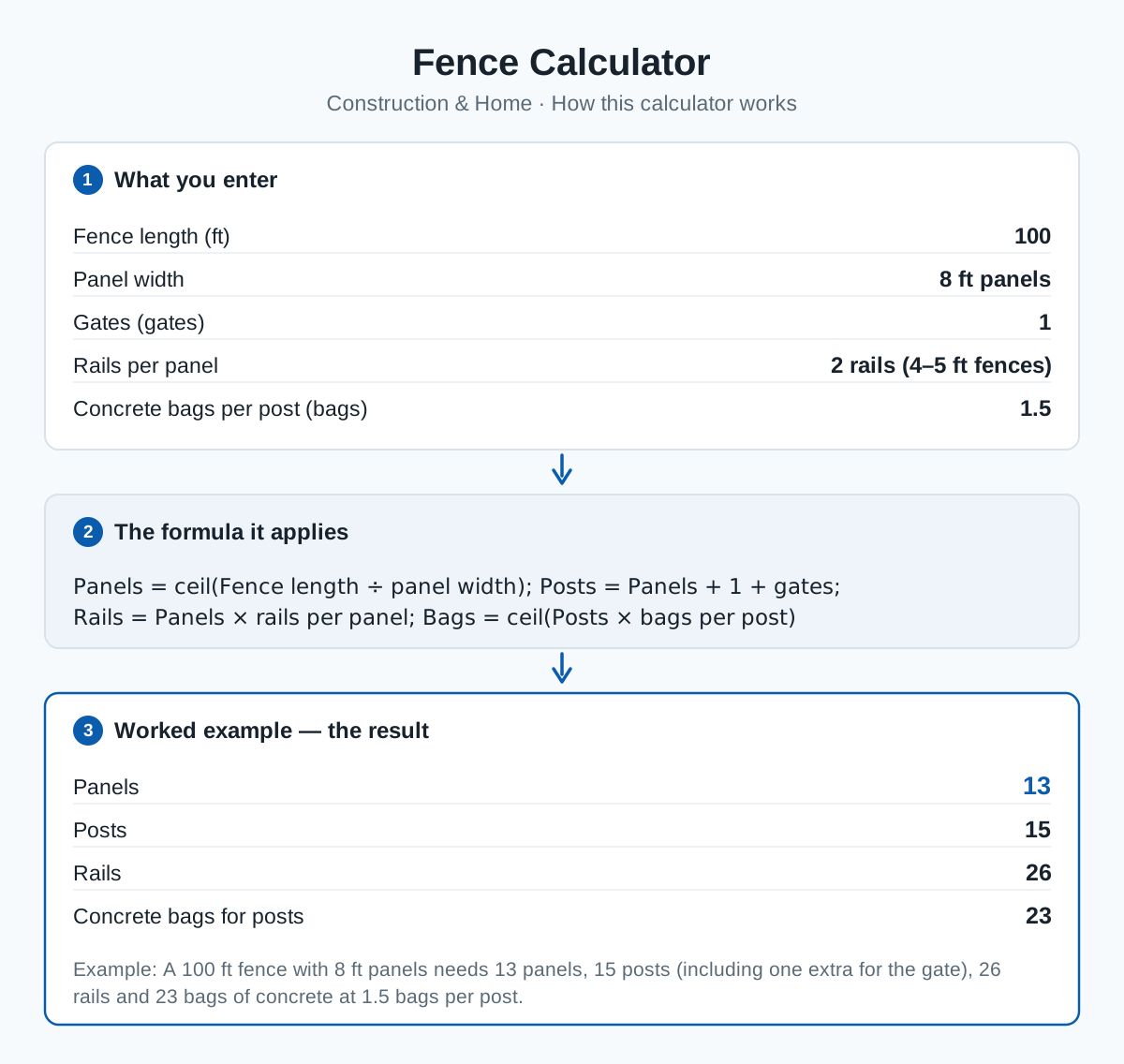
Enter the total fence length and pick a standard panel width (6 or 8 ft). The calculator rounds the panels UP to cover the run, counts posts as one at the start of every panel plus one at the end — with an extra post for each gate — and totals the horizontal rails and the concrete for setting the posts.
Concrete uses 1.5 bags per post by default, a typical figure for a 60-lb bag and a standard post hole; deep holes, wide bores or gate posts need more, so adjust the bags-per-post input to your hole size. All counts are whole units, rounded up where a fraction would occur.
The formula
Worked example
A 100 ft fence with 8 ft panels needs 13 panels, 15 posts (including one extra for the gate), 26 rails and 23 bags of concrete at 1.5 bags per post.
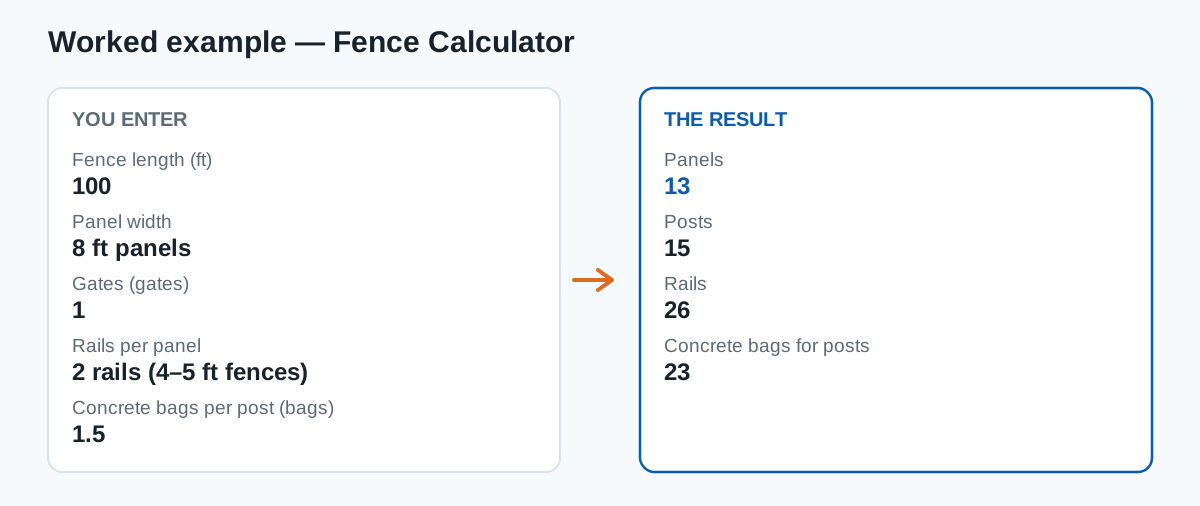
The example is pre-loaded in the result panel — press Calculate with your own numbers to replace it.
Frequently asked questions
How far apart should fence posts be?
Posts are spaced one panel width apart — 8 ft or 6 ft for pre-made panels. Spacing posts wider than the panel width leaves panels unsupported and sagging; in high-wind areas or for heavy gates, 6 ft spacing is safer.
How much concrete does one post need?
A typical 10–12 inch diameter hole about 2 ft deep takes roughly 1–2 bags of 60-lb concrete mix per post after the post displaces its volume. Gate and corner posts benefit from a bigger hole and an extra bag.
Does the last panel get cut?
Usually yes — runs rarely divide exactly by the panel width. This calculator rounds the panel count up; cut the final panel to fit rather than squeezing post spacing.
Category: Construction & Home calculators
Sources & methodology
This calculator applies the formula shown on this page exactly as written, using the standard definitions for its inputs. Results are computed from the values you enter — no data is stored — and are rounded only for display.
Content last reviewed by CalcHub Editorial.
Embed this calculator on your site
Free to use with attribution — paste the snippet below and the calculator appears on your page, with a link back to CalcHub.
Related calculators
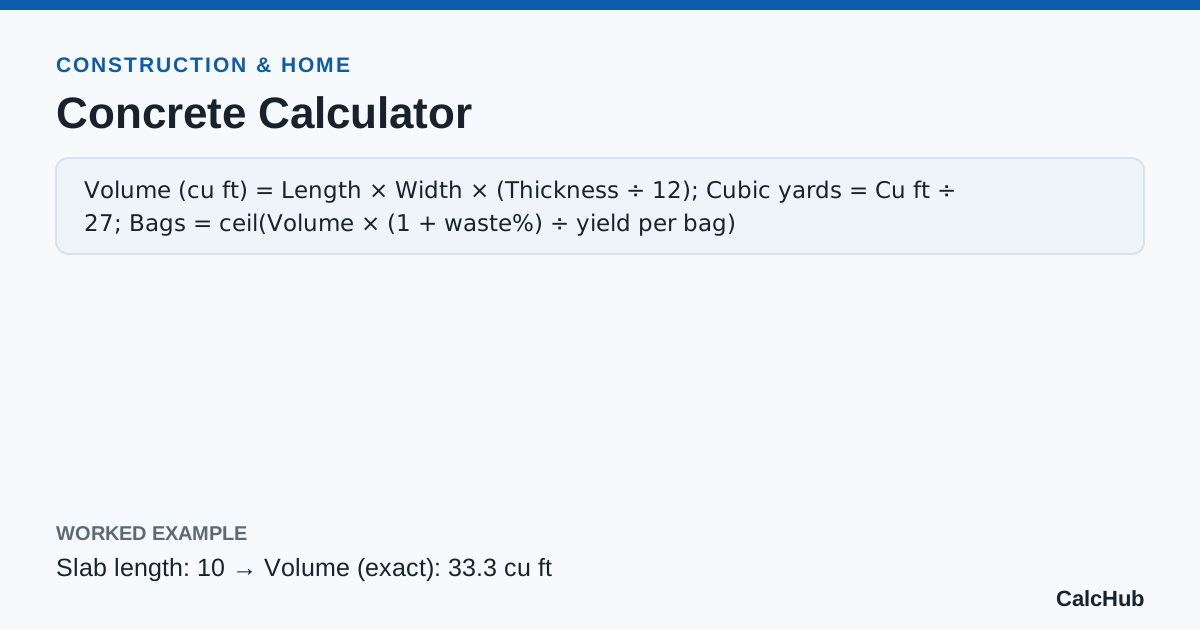
Concrete Calculator
Cubic yards, cubic feet and bags of concrete for a slab, footing or post hole pad.
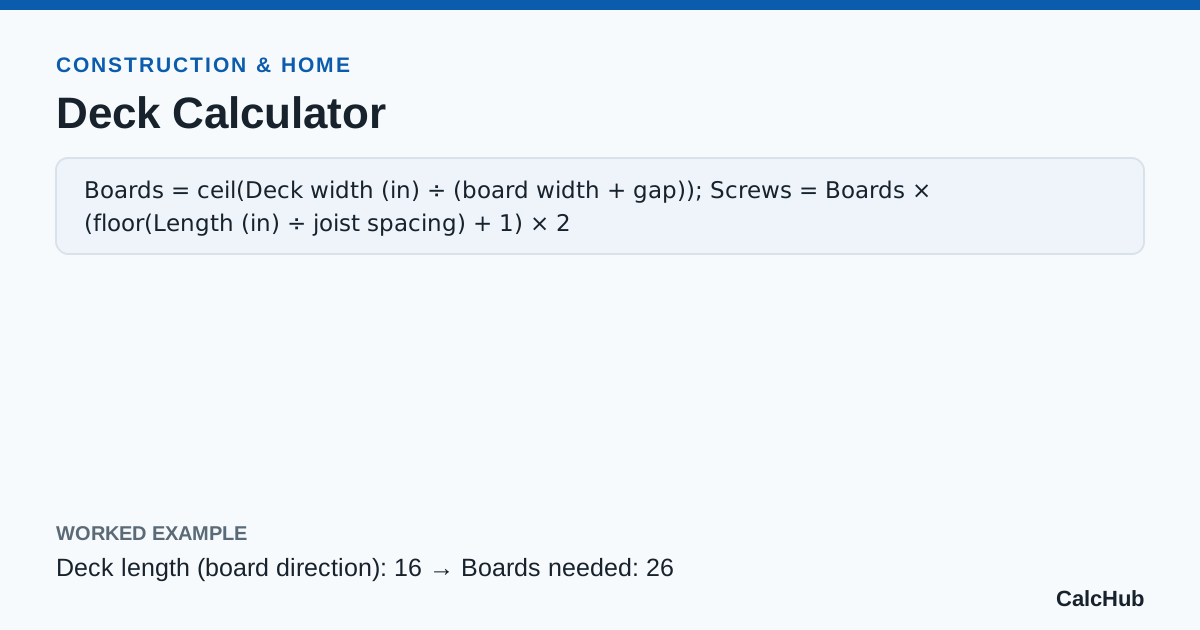
Deck Calculator
Deck boards, linear feet and screw count for a rectangular deck.
Board Feet Calculator
Board feet and cubic volume of lumber from nominal dimensions and quantity.
Cubic Yard Calculator
Convert length × width × depth into cubic yards, cubic feet and cubic meters.