
Powerlifting Total Calculator
Add up squat, bench and deadlift — total, bodyweight multiple and lift split.
Quick answer
- A total of 5× bodyweight is a strong competitive milestone for men and about 4× for women; elite open lifters reach 7–9× depending on weight class.
- Typical raw split: squat 32–38%, bench 20–25%, deadlift 38–43% of the total — chase the lift that sits lowest in its band.
- The total alone does not rank you across weight classes — feed it into the Wilks, DOTS or IPF GL calculators for a comparable score.
- Worked example — Powerlifting total: 520.0 kg (full example below).
Powerlifting Total Calculator
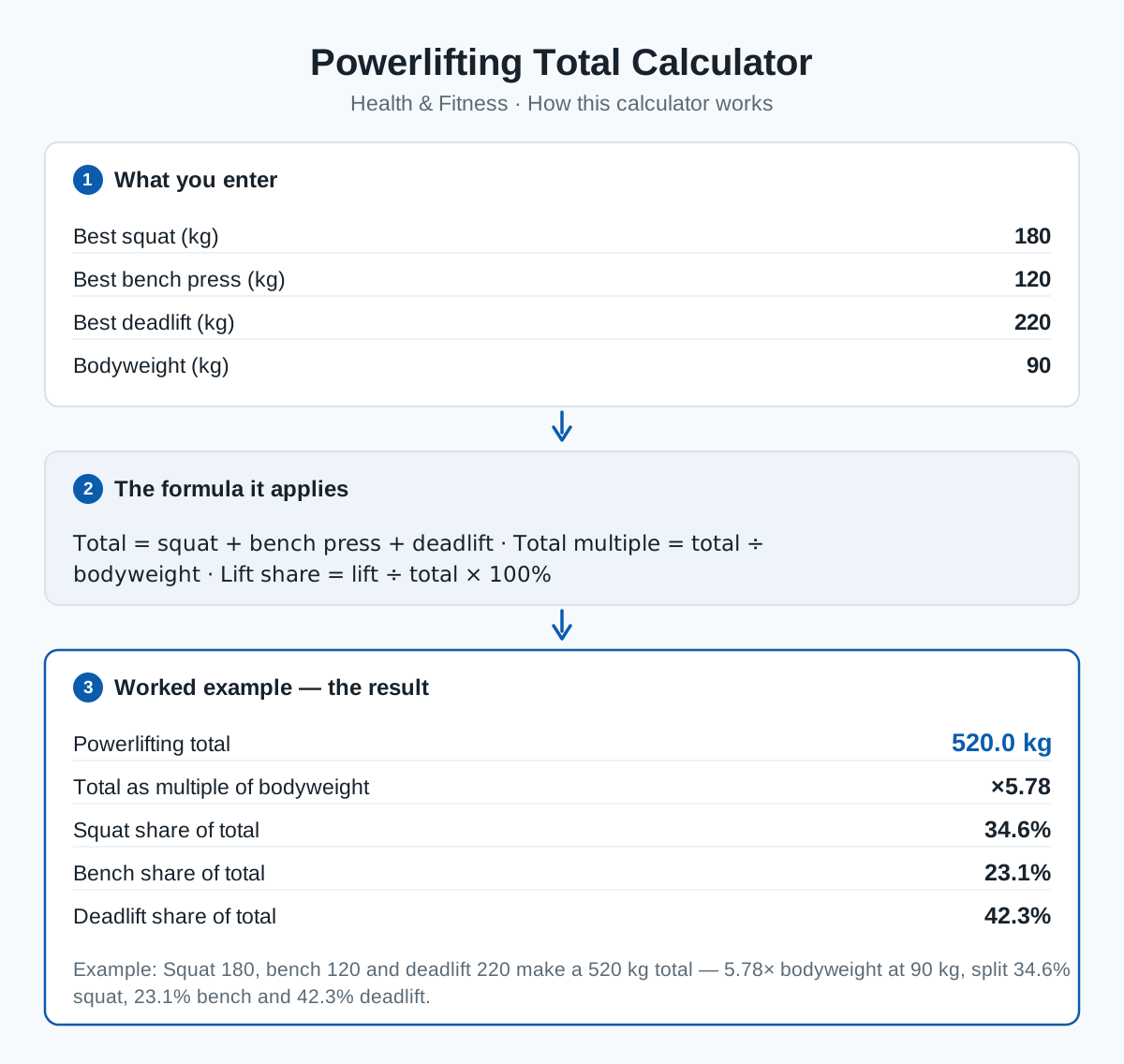
| Powerlifting total | 520.0 kg |
| Total as multiple of bodyweight | ×5.78 |
| Squat share of total | 34.6% |
| Bench share of total | 23.1% |
| Deadlift share of total | 42.3% |
Squat 180, bench 120 and deadlift 220 make a 520 kg total — 5.78× bodyweight at 90 kg, split 34.6% squat, 23.1% bench and 42.3% deadlift.
Your powerlifting total is the sport's fundamental number: best squat + best bench press + best deadlift, each the heaviest successful attempt from the same competition. This calculator adds your three lifts, expresses the total as a multiple of your bodyweight, and shows what share each lift contributes.
The split is diagnostic. Bench press commonly contributes around 20–25% of a raw total, squat 32–38% and deadlift 38–43%; a lift far outside its band is usually where your next training block earns the most kilos — or where a scoring calculator like Wilks or DOTS will reward work first.
The formula
Worked example
Squat 180, bench 120 and deadlift 220 make a 520 kg total — 5.78× bodyweight at 90 kg, split 34.6% squat, 23.1% bench and 42.3% deadlift.
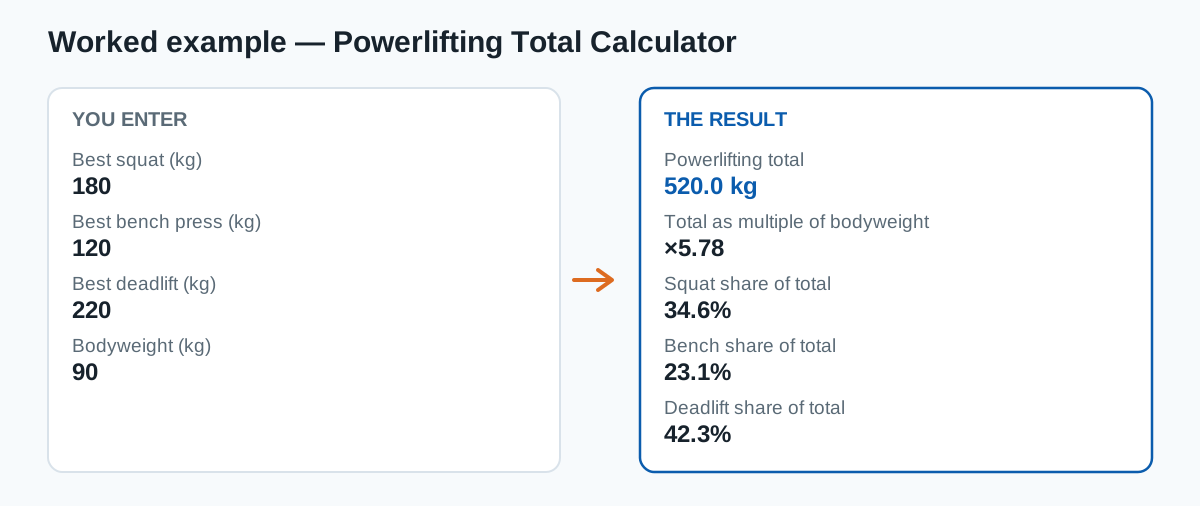
The example is pre-loaded in the result panel — press Calculate with your own numbers to replace it.
Frequently asked questions
What counts toward a powerlifting total?
Your heaviest successful attempt in each of the squat, bench press and deadlift in the same competition. Miss every attempt in one lift ('bombing out') and there is no total, whatever the other two lifts were.
What is a good total for my weight class?
Use the bodyweight multiple as a rough guide: around 4× (women) or 5× (men) is strong club level, and scores from Wilks, DOTS or IPF GL compare you properly across classes — 400 Wilks/DOTS or ~80 GL points is national-level territory.
Should gym lifts count?
For training tracking, yes — but honest comparison needs competition standards: squat to depth, a paused bench, and a deadlift without straps or hitching. Most lifters find their strict total is 2–5% below their gym total.
Category: Health & Fitness calculators
Sources & methodology
Plain competition arithmetic: total = squat + bench + deadlift using the best successful attempt for each lift (all in kg); multiple = total ÷ bodyweight; shares = each lift ÷ total × 100. Only count lifts performed to competition standard if you intend to compare the total with meet results.
Content last reviewed by CalcHub Editorial.
Embed this calculator on your site
Free to use with attribution — paste the snippet below and the calculator appears on your page, with a link back to CalcHub.
Related calculators
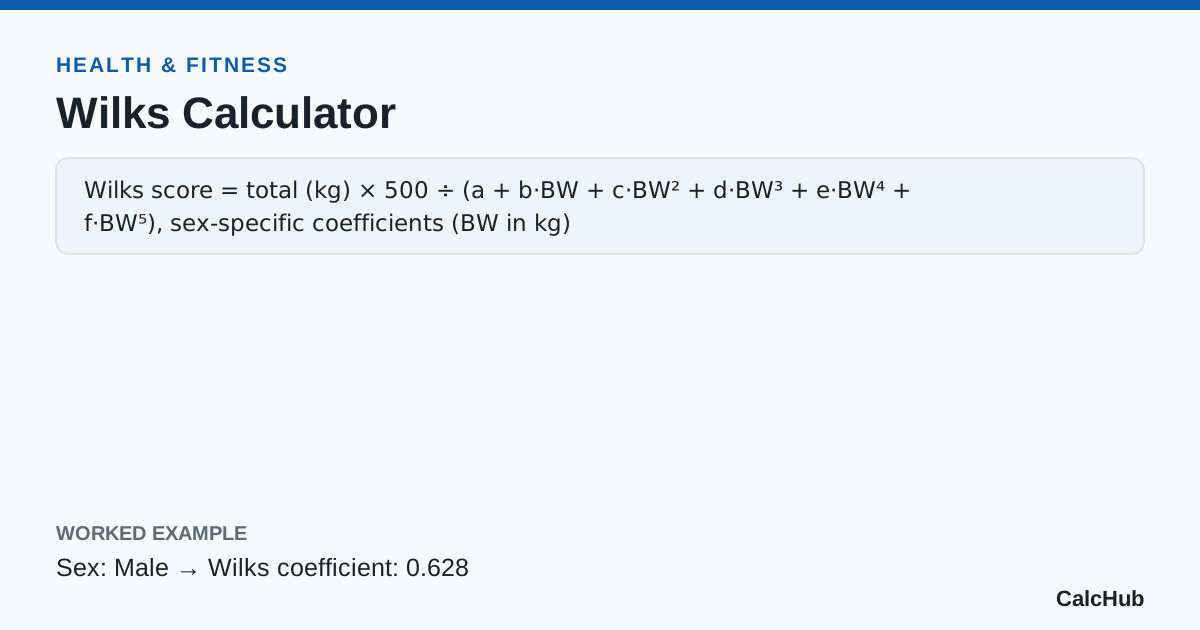
Wilks Calculator
The original Wilks score — compare powerlifting totals across bodyweights.
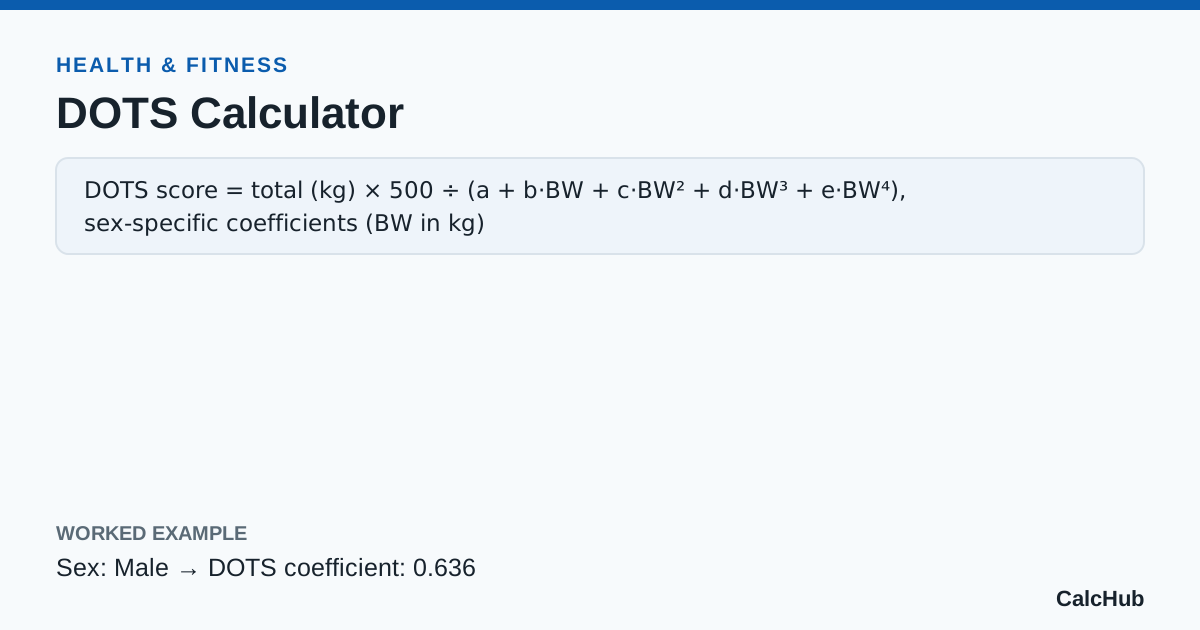
DOTS Calculator
DOTS score — the modern bodyweight-adjusted powerlifting score.
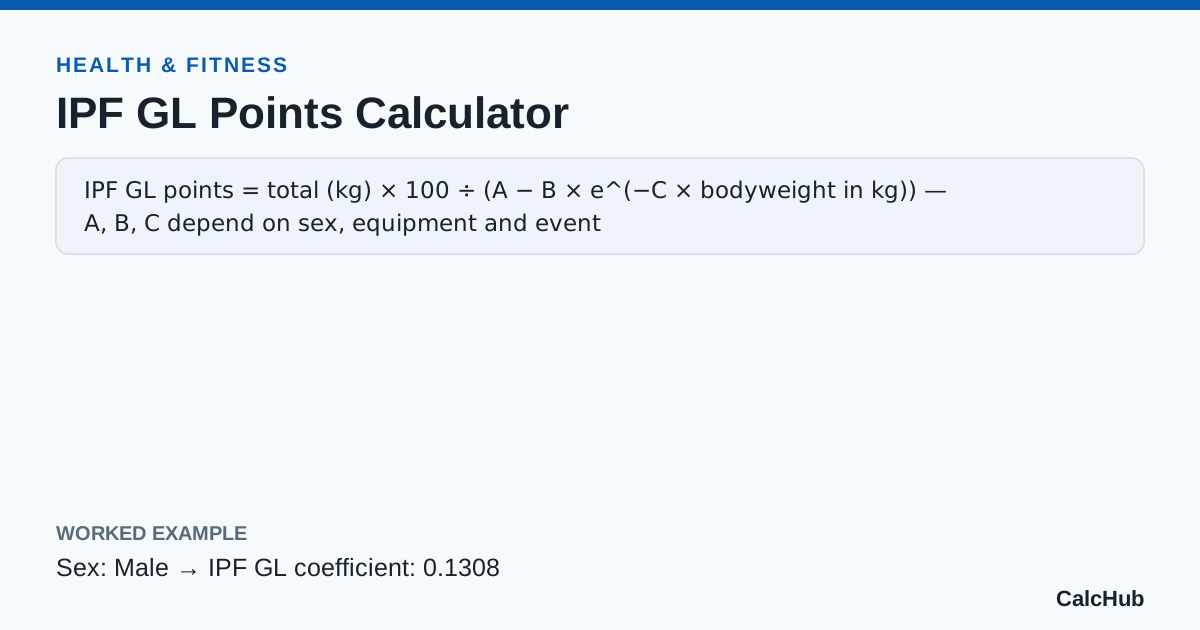
IPF GL Points Calculator
Official IPF Goodlift points for classic and equipped powerlifting and bench press.
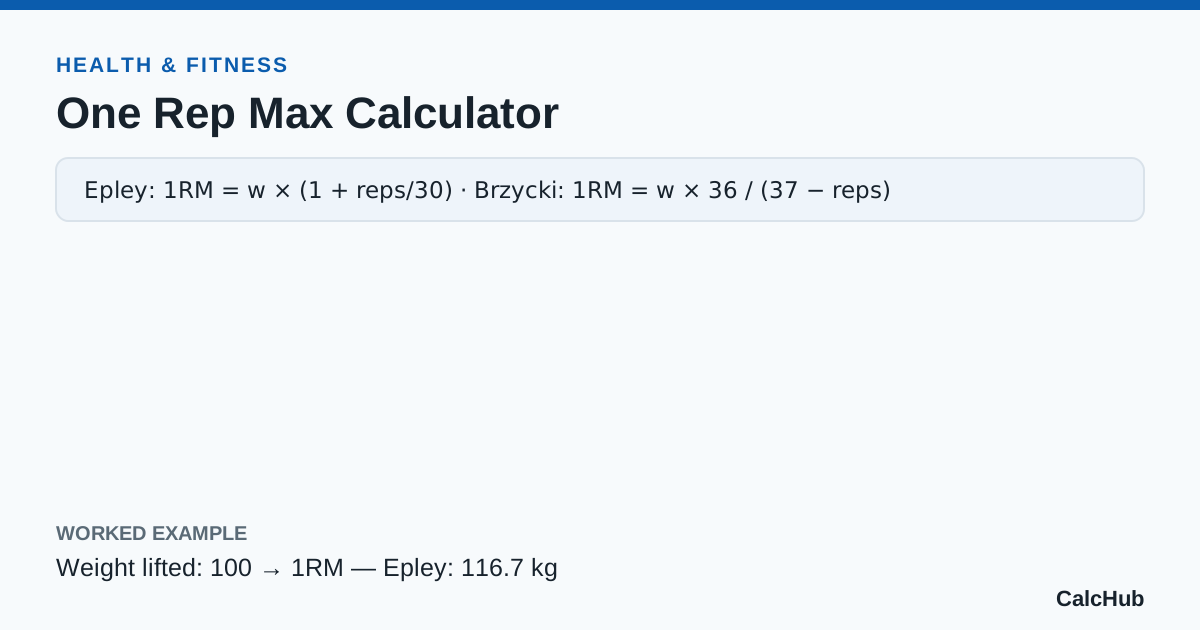
One Rep Max Calculator
Estimate your 1RM from a submaximal set — Epley and Brzycki formulas.