
FFMI Calculator
Fat-free mass index and height-normalized FFMI from weight, height and body fat.
Quick answer
- FFMI measures muscle relative to height: for men, 18–20 is average, 20–22 is clearly trained, 22–23 is excellent, and about 25 is the widely cited ceiling for drug-free lifters in Kouri's data.
- Women's bands sit roughly 2–3 points lower — about 21–22 is the comparable drug-free ceiling.
- A 1-point FFMI gain at 1.80 m means about 3.2 kg more fat-free mass — FFMI moves slowly, which makes it a good long-term recomposition tracker.
- Worked example — Fat-free mass: 72.3 kg (full example below).
FFMI Calculator
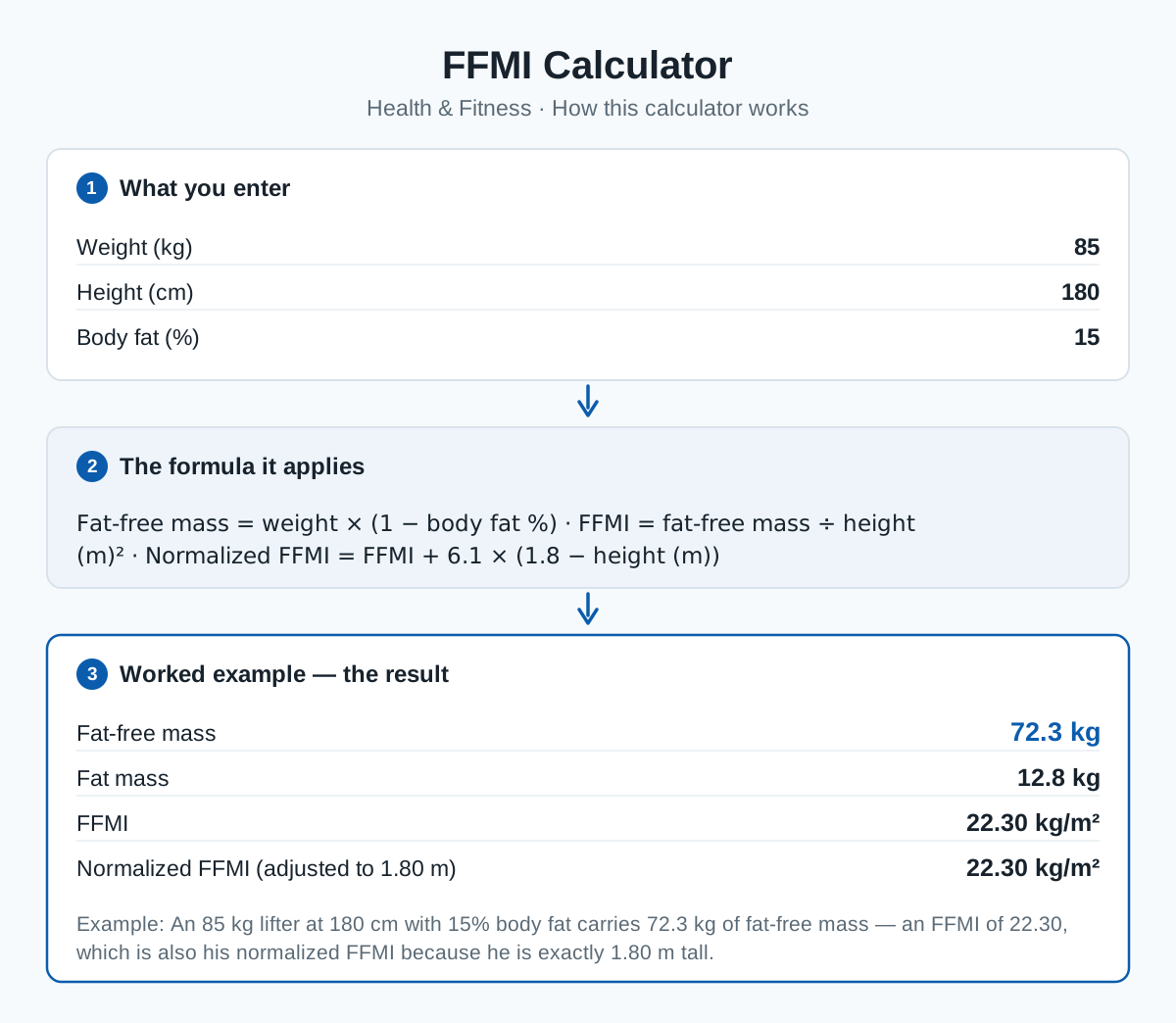
| Fat-free mass | 72.3 kg |
| Fat mass | 12.8 kg |
| FFMI | 22.30 kg/m² |
| Normalized FFMI (adjusted to 1.80 m) | 22.30 kg/m² |
An 85 kg lifter at 180 cm with 15% body fat carries 72.3 kg of fat-free mass — an FFMI of 22.30, which is also his normalized FFMI because he is exactly 1.80 m tall.
The fat-free mass index (FFMI) is BMI's muscular counterpart: it divides your fat-free mass — everything except fat — by your height squared. It was introduced by Kouri and colleagues in 1995 in a study of steroid users and non-users, which is why FFMI is widely used to judge how muscular a physique is for its height.
Because taller people are penalised by the height-squared scaling, Kouri also published a normalized FFMI that adjusts the score to a reference height of 1.80 m: normalized FFMI = FFMI + 6.1 × (1.8 − height in m). This calculator shows fat-free mass, fat mass, raw FFMI and normalized FFMI. FFMI is only as accurate as the body-fat figure you enter — a DEXA scan or a careful Navy-method estimate beats a bathroom scale.
The formula
Worked example
An 85 kg lifter at 180 cm with 15% body fat carries 72.3 kg of fat-free mass — an FFMI of 22.30, which is also his normalized FFMI because he is exactly 1.80 m tall.
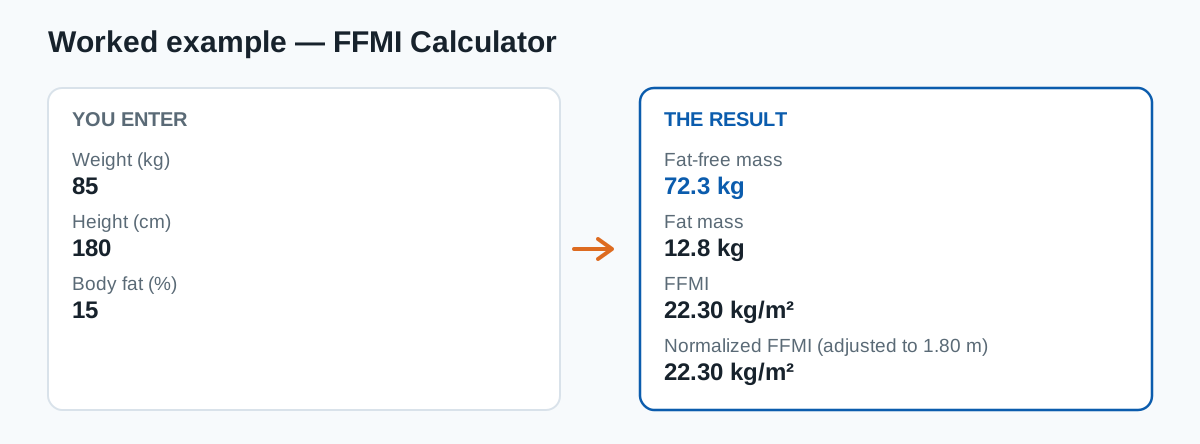
The example is pre-loaded in the result panel — press Calculate with your own numbers to replace it.
Frequently asked questions
What FFMI is achievable without steroids?
In Kouri's 1995 sample, non-users topped out at a normalized FFMI of about 25, while steroid users exceeded it — which is why ~25 is quoted as the natural ceiling for men. It is a statistical guide, not a hard biological law, and women's comparable ceiling is about 21–22.
How accurate is my FFMI?
It inherits the error of your body-fat input. A 3-point body-fat error at 85 kg moves FFMI by roughly 0.8 points, so use the best measurement you have and compare like with like over time.
FFMI vs lean body mass — what is the difference?
Lean body mass is the raw kilogram figure; FFMI divides it by height squared so people of different heights can be compared. Our lean body mass calculator estimates LBM from height and weight (Boer formula) when you do not know your body fat.
Category: Health & Fitness calculators
Sources & methodology
Fat-free mass = body weight × (1 − body fat fraction). FFMI = fat-free mass ÷ height² (height in metres). Normalized FFMI applies Kouri et al.'s (1995) height correction, +6.1 × (1.8 − height in m), so at exactly 180 cm raw and normalized FFMI are identical. No sex input is needed because the equations themselves are sex-neutral; only the interpretation bands differ.
- Kouri EM et al. — Fat-free mass index in users and nonusers of anabolic-androgenic steroids (Clin J Sport Med, 1995)
- FFMI formula, normalization and reference bands
Content last reviewed by CalcHub Editorial.
Embed this calculator on your site
Free to use with attribution — paste the snippet below and the calculator appears on your page, with a link back to CalcHub.
Related calculators
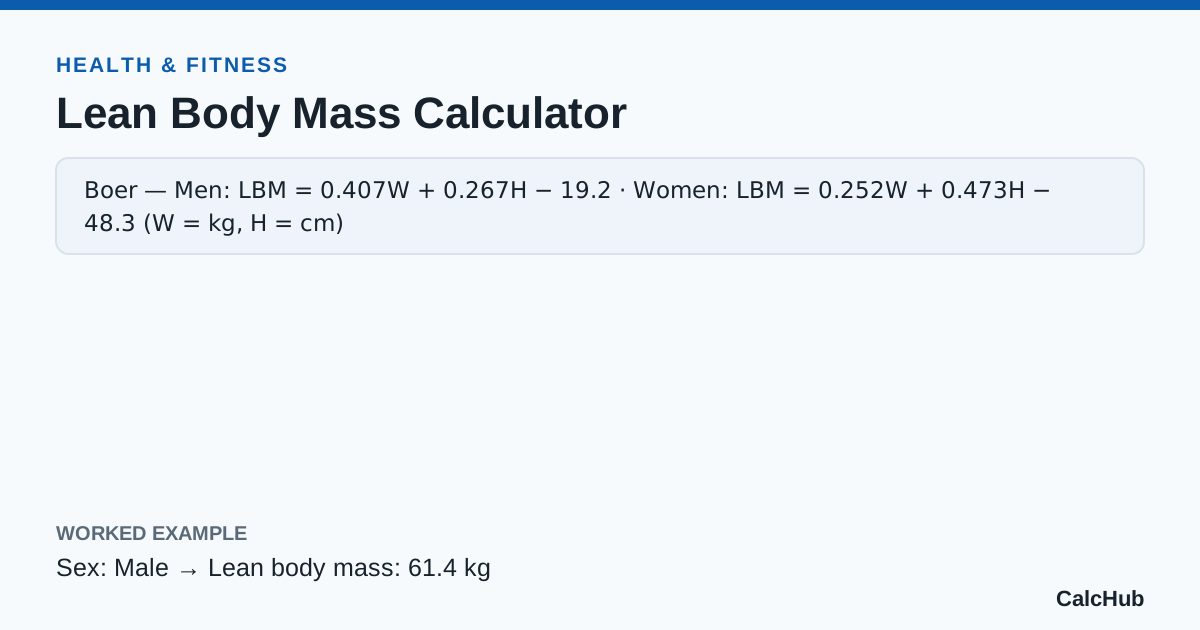
Lean Body Mass Calculator
Lean body mass from the Boer formula, with implied fat mass.
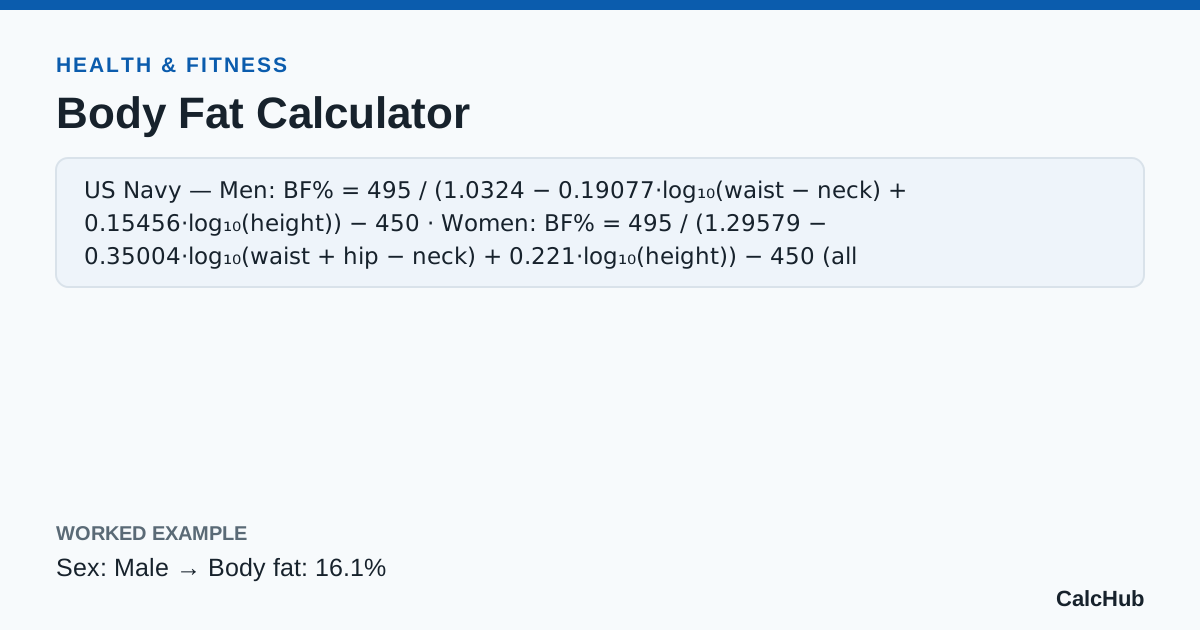
Body Fat Calculator
Estimate body fat percentage from tape measurements — the US Navy method.
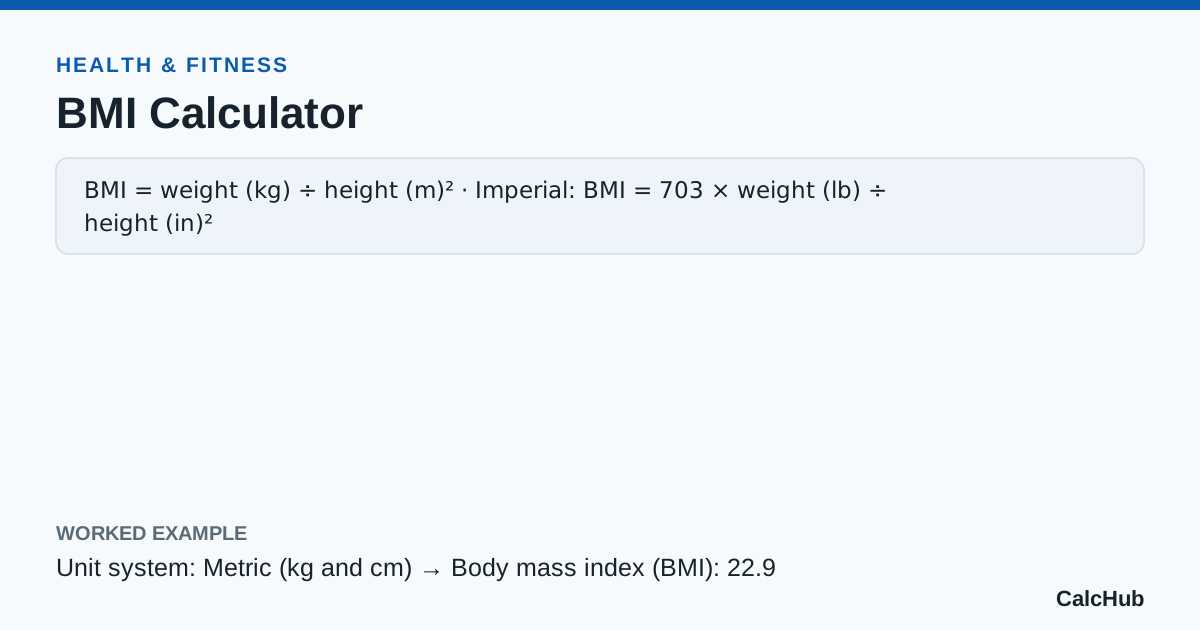
BMI Calculator
Body mass index from your weight and height, with the standard weight category.
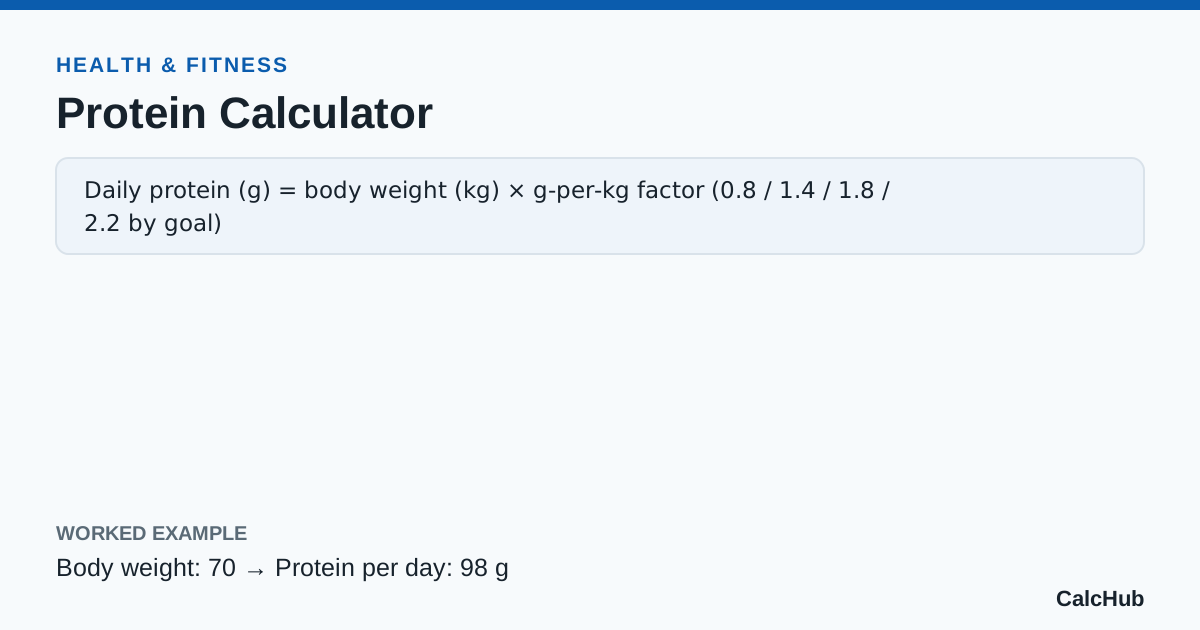
Protein Calculator
Daily protein target in grams, scaled to your body weight and goal.